The heath first entered the history books in 986 whenEthelred the Unreadygranted one of his servants fivehides of landat "Hemstede". This same land is later recorded in theDomesday Bookof 1086 as held by the monastery of St. Peter's atWestminster Abbey, and by then is known as the "Manor of Hampstead".[4]Westminster held the land until 1133 when control of part of the manor was released to one Richard de Balta; then duringHenry II's reign the whole of the manor became privately owned by Alexander de Barentyn, the King'sbutler. Manorial rights to the land remained in private hands until the 1940s when they lapsed under Sir Spencer Pocklington Maryon Wilson,[citation needed]though the estate itself was passed on toShane Gough, 5th Viscount Gough.[4]
Over time, plots of land in the manor were sold off for building, particularly in the early 19th century, though the heath remained mainly common land. The main part of the heath was acquired for the people by the Metropolitan Board of Works.[5] Parliament Hill was purchased for the public for £300,000 and added to the park in 1888. Golders Hill was added in 1898 and Kenwood House and grounds were added in 1928.[6]
The City of London Corporation has managed the heath since 1989.[7] Before that it was managed by the GLC and before that by the London County Council (LCC).
In 2021, Quiet Parks International—a non-profit organisation whose aim is to identify locations around the world that remain free from human-made noise for at least brief periods—gave Hampstead Heath "Urban Quiet Park" status.[8]
The heath sits astride a sandy ridge that rests on a band of London clay. It runs from east to west, its highest point being 134 metres (440 ft).[9][10] As the sand was easily penetrated by rainwater which was then held by the clay, a landscape of swampy hollows, springs and man-made excavations was created.[2] Hampstead Heath contains the largest single area of common land in Greater London, with 144.93 hectares (358.1 acres) of protected commons.[11]
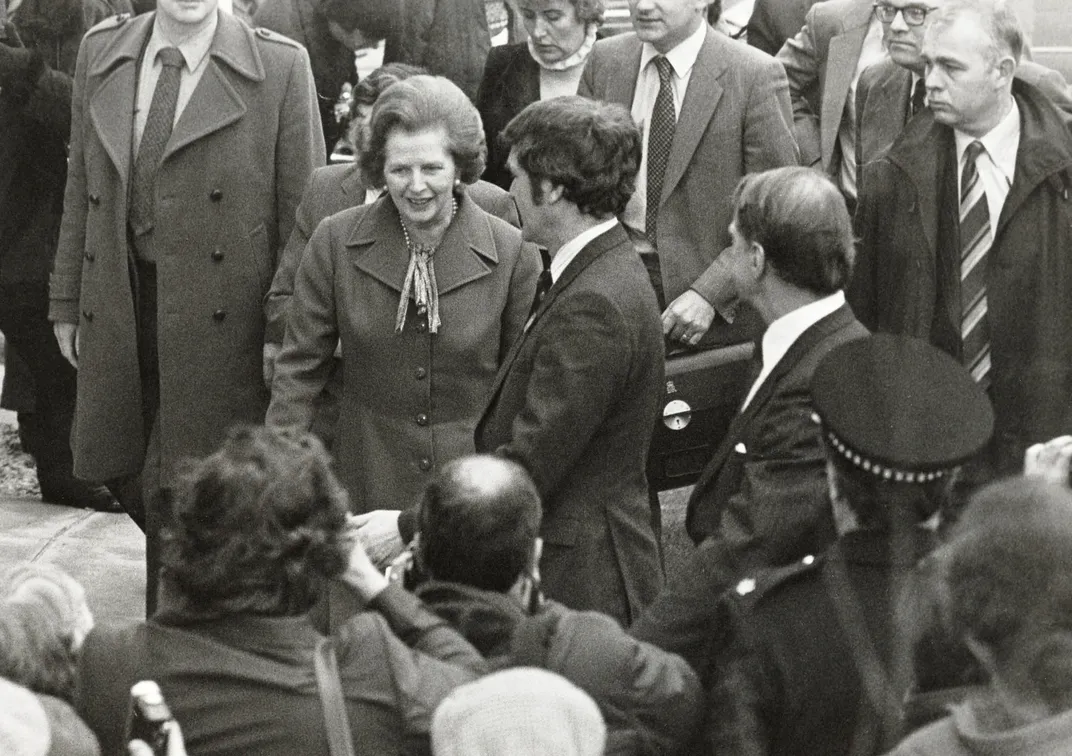
For ten weeks in the spring of 1982, a sparsely populated string of islands hundreds of miles east of South America dominated headlines around the world. In a chapter of global history that represents one of the last gasps of a shrinking British Empire, the United Kingdom—otherwise beset byhigh unemploymentandeconomic stagnationat home—battled the sovereign nation of Argentina for control of the islands. TheFalklands War, as the 74-day conflict came to be known, may seem rather unremarkable today, despite the loss in life, but its influence can still be felt in the British Isles. The U.K.’s success in South America cemented Conservative Party Prime Minister Margaret Thatcher’shold on powerandrallied the nationbehind a common cause: protecting one of the last vestiges of its time as a global superpower.
As British columnist George Gale wrote in the aftermath of Argentina’s surrender to British forces, “We have seen in these weeks of crisis … a remarkable resurgence of patriotism. It has welled up from the nation’s depth. We have undergone a sea-change.”
The latest season of Netflix’s “The Crown” features a fictionalized version of the 1982 clash, pitting Thatcher (Gillian Anderson) against Elizabeth II (Olivia Colman) in a battle of wills over Britain’s future. Set between 1979 and 1990, the fourth installment follows the royal family from the IRA’s assassination of Lord Mountbatten (Charles Dance) to Prince Charles’ (Josh O’Connor) courtship of Lady Diana Spencer (Emma Corrin) and Thatcher’s eventual resignation from office. The Falklands War takes center stage—albeit with a heavy dose of dramatization—in episodes four and five.
Here’s what you need to know to separate fact from fiction while watching the series’ depiction of the conflict.
What sparked the Falklands War?
The Falkland Islands—an archipelago in the South Atlantic located 8,000 miles away from the British Isles—were once one of the U.K.’s more obscure overseas territories, home to a community of just 1,800 people, the majority of whom were of British descent. Almost all of these individuals were rural sheep farmers who worked as tenants on land owned by a local corporation. Per the New York Times’ Larry Rohter, the islanders “depended on the company for everything.”
Prior to the outbreak of war, the U.K. had been reluctant to invest in its Connecticut-sized colony. Sheep dominated the Falklands’ economy, and islanders’ hopes of expanding into the fishing industry had proven largely futile. Across the Atlantic, the Falklands were so little-known, notes historian and journalist Dominic Sandbrook for History Extra, that many of the British servicemen deployed to the area in April 1982 “genuinely assumed” that they were headed to islands off the coast of Scotland, not in the middle of the South Atlantic.
Britain’s presence in the Falklands dates back to 1690, when Navy Captain John Strong made the first recorded landing on the unpopulated islands. The British started a settlement on the archipelago in the mid-18th century but abandoned it around a decade later, leaving the area under Spanish control. The newly independent Argentina arrived on the scene in 1820 and promptly laid claim to the Falklands, arguing that it had inherited the islands from the Spanish crown earlier that century.
British troops returned to the Falklands in 1833, expelling its Argentinian officials and reasserting the U.K.’s claim to the islands. Backed by the United States, which had previously clashed with Argentina over whaling and seal hunting in the area, Britain established the Falklands as an official colony. The South American nation has asserted its own sovereignty over the islands, which Argentinians call Las Malvinas, ever since.
Britain’s government had actually attempted to convince the islands’ inhabitants to join Argentina in the decades leading up to the war, as it “saw little long-term future and was reluctant to invest in making the Falklands prosperous and secure,” writes scholar Lawrence Freedman for History Extra. But a 1968 agreement guaranteeing that the islanders would have final say over their home’s sovereignty hampered these efforts, and a proposed lease-back arrangement in which the Falklands would remain under British administration but acknowledge Argentinian sovereignty ultimately fizzled out.
Long-standing tensions between the two nations boiled over on March 19, 1982, when Argentinian scrap metal workers raised their country’s flag at an abandoned whaling station on the even-more distant island of South Georgia, then one of the Falkland Islands Dependencies. Two weeks later, on April 2, Argentinian forces moved in at Leith Harbor in South Georgia, overwhelming key British outposts without inflicting any casualties. (See the History Press for a day-by-day timeline of the ten-week struggle.)
Thatcher, sensing an opportunity to revitalize her faltering political aspirations, voiced her commitment to defending the Falklands in an April 5 interview with British broadcaster ITN: “We have to recover those islands, we have to recover them for the people on them are British … and they still owe allegiance to the crown and want to be British.”
The prime minister deployed a naval task force to the islands, upending the Argentinian military junta’s expectation that the British would acquiesce without mounting a defense. (Led by General Leopoldo Galtieri, the Argentinian dictatorship had embarked on the military campaign in hopes of appealing to nationalist sentiment and distracting the populace from Argentina’s poor economy.) Arriving in the Falklands in late April, British troops engaged in a series of naval and air battles, successfully wearing down Argentina’s superior air forces despite the U.S. Navy’s prediction that recapturing the islands would be a “military impossibility.”
According to the Telegraph, perhaps the “most controversial episode” of the conflict took place on May 2, when the Royal Navy’s Conqueror submarine sank the General Belgrano cruiser. Though the Argentinian vessel had entered Britain’s 200-mile exclusion zone the day prior, it had departed by the time of the torpedo attack and appeared to pose no immediate threat. At the same time, however, both sides acknowledged that the entire South Atlantic was essentially an operational theater of war; recent research also suggests that the vessel was directly involved in operations threatening the British task force. Approximately 323 Argentinian crewmen died in the sinking, making the incident the Falklands War’s single greatest loss of life.
Critics at the time accused Thatcher of ordering “the attack as a deliberate act of provocation designed to escalate the conflict and scupper hopes of a diplomatic resolution,” per the Telegraph. Public opinion remains divided, with proponents characterizing the sinking as a legitimate act of war and detractors condemning it as a war crime.
A 1994 report by the Argentinian Defense Ministry concluded that the attack was “a legal act of war.” Speaking with the Telegraph in 2007, Belgrano artilleryman Ruben Volpe said, “[T]his was a war and the attack was an act of war, not a war crime. Sinking our most potent vessel outside the exclusion zone demonstrated the power that the British had.”
On May 21, British commandos made an amphibious landing on the islands; after a few weeks of heavy fighting and further casualties, the Argentinians surrendered, bringing the 74-day clash to a close on June 14.
In total, 649 Argentinian military personnel, 255 British troops and 3 Falkland Islanders died over the course of the undeclared war. Though Britain celebrated its retention of control as an unmitigated triumph, this “glow of victory was to conceal how desperately close” the battle was, wrote columnist Simon Jenkins for the Guardian in 2013.
“The conclusion of most defense analysts is that the Argentinians should have won this war,” Jenkins added, “and had they [held out until] the south Atlantic storms of June they probably would have.”
How did the Falklands War shape modern British society?
Three days after Argentina invaded the Falklands, a survey of British citizens watching the events from home found that 88 percent of those polled felt the U.K. had an “obligation” to support the islanders. Seventy percent advocated sinking Argentinian ships if necessary, and 41 percent called for the immediate use of government force. In other words, the Falklands War was highly popular in an otherwise increasingly divided country.
“The empire was gone, the economy was struggling, the old industrial base was crumbling and the old certainties had vanished,” writes Sandbrook for History Extra. “Inflation, strikes, unemployment; riots, bombings, scandals; failure, shabbiness, disappointment: [T]his had been Britain’s narrative since the mid-1960s.”
Thatcher, who had run for office in 1979 on a platform of privatization of state-owned enterprises, decreased government spending and the restriction of trade unions, was finding it difficult to live up to her campaign slogan: “Don’t just hope for a better life. Vote for one.” Record-breaking unemployment and a recession the likes of which had not been seen since the Great Depression threatened to ensure her time as prime minister was short-lived. Then, Argentina invaded the Falklands, forcing the Conservative Party leader to quickly formulate a decisive response—a challenge she readily rose to meet.
Thatcher’s objectives were twofold, wrote historian Domenico Maria Bruni in a 2018 journal article: First, the prime minister had to defend her government against accusations of failing to prevent the attack. More importantly, she also needed to determine how best to defuse the potential military disaster.
“She was decisive, determined, effective,” Chris Collins, a historian at the Margaret Thatcher Foundation, told History.com in 2019. “There was never the slightest note of doubt in her public responses, and she was pretty clear privately too. We would get the islands back. I don’t think any other British leader at that time would have handled things quite as clearly.”
Sandbrook argues that the Falklands War supplied a dose of “nostalgic nationalism” to a country in need of a win.
“In practical terms it changed nothing,” he writes. “Psychologically, however, it changed everything. In the public imagination, it marked the end of an era defined by post-imperial introspection, providing a new national myth to rank alongside Dunkirk and the Battle of Britain.”
Following its humiliating defeat in the Falklands, Argentina’s military junta suffered a rapid fall from power, with citizens ousting the Peronist Justicialist Party in favor of a new regime. The result of 1983’s free election—the first of its kind in almost a decade—was widely heralded as “a vote for democracy,” according to the New York Times.
The Falklands, meanwhile, experienced an unprecedented period of post-war prosperity. As Larissa MacFarquhar writes for the New Yorker, Britain “allotted the islands more aid money than it ever had before,” in addition to granting islanders full British citizenship and offering independence “in all matters except foreign policy and defense.” In 2013, residents overwhelmingly opted to remain a British overseas territory, with just three of some 1,500 voters casting dissenting ballots.
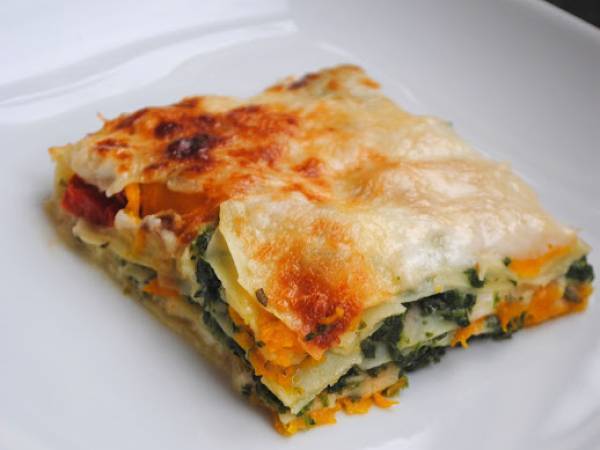
Preparate la béchamel: sciogliete in una casseruola il burro, aggiungete la farina e cuocete mescolando per mezzo minuto circa a fuoco medio. Versare il latte a filo, facendo attenzione a non formare dei grumi, e proseguite la cottura a fuoco basso fino a che la salsa si sarà addensata.
Salate, pepate e aggiungete il formaggio di capra grattugiato. Mescolate con cura e fate sciogliere il formaggio. Accendete il forno a 220°, sbucciate e affettate la zucca in fette sottili, condite con olio, sale e rosmarino, disponetele in un unico strato su una teglia e infornate per circa 8-10 minuti.
Lasciate raffreddare. Lavate gli spinaci e sbollentateli, in acqua bollente salata, per alcuni minuti. Scolateli, tritateli, salateli e pepateli, tagliate quindi i pomodorini in 4 parti. Sbollentate per un minuto le sfoglie, se usate delle sfoglie più spesse rispetto, regolatevi voi per la cottura.
Prendete la teglia stendete un sottile strato di béchamel, quindi posate le sfoglie, proseguite con spinaci, zucca, pomodoro e béchamel e proseguite fino alla fine degli ingredienti. Completate con dei fogli di lasagna e béchamel. Cospargete con il parmigiano grattugiato e cuocete a 180° per 35-40 minuti.
Iniziare a preparare la carne, se le fettine sono spesse batterle con il batticarne, infarinare bene su entrambe i lati e scuotere per eliminare la farina in eccesso. In una padella scaldare l'olio insieme al burro, appena si sarà sciolto aggiungere le fettine e cuocere per un paio di minuti salando leggermente. Quando la carne sarà rosolata, togliere e mettere da parte. Versare nella padella il succo delle arance
Unire un cucchiaio di farina (potrebbe servirne anche un po' di più), mescolare il tutto in modo da formare una cremina
Infine, rimettere le fettine nella padella facendole insaporire bene, aggiungendo un po' di scorza di arancia grattugiata. Impiattare, servire e mangiare calde. Buon Appetito!!!